Why the Frame Decides What Counts as a Clue
Learn to read framing without mistaking implication for proof, using a simple screen-reading routine to separate visible details from assumed meaning.
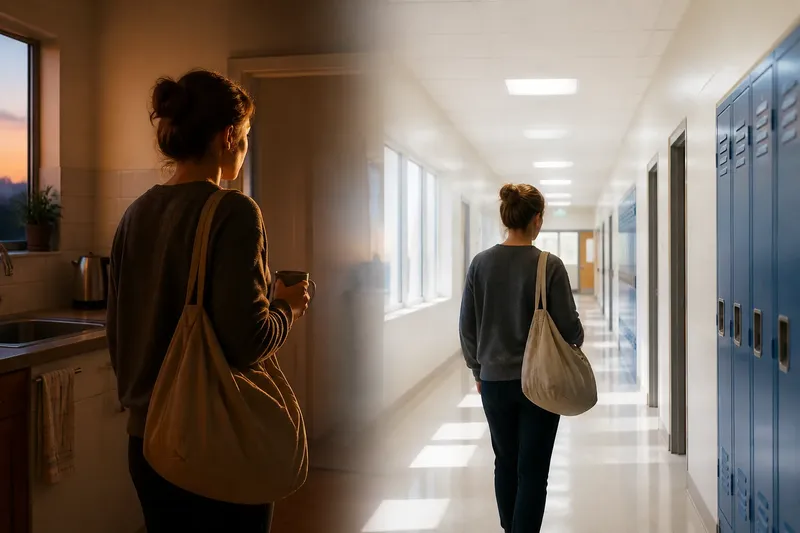
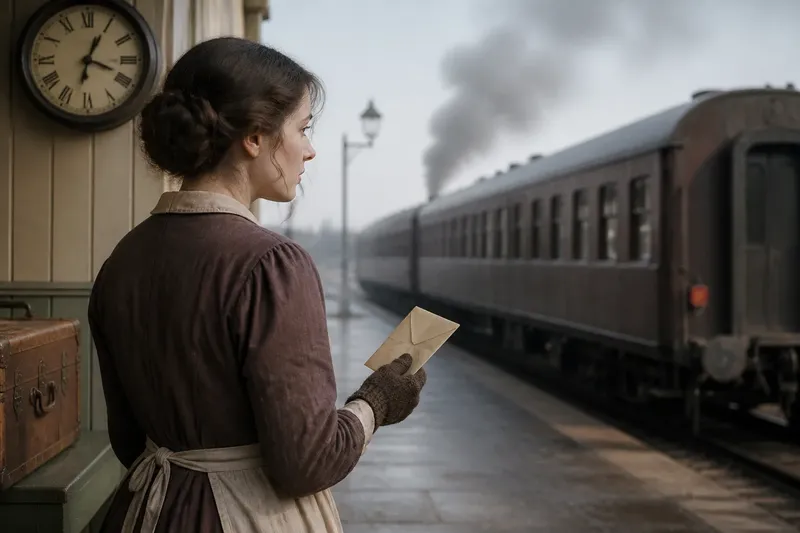
A close view of a character’s hand resting beside a key can make the key feel important before anyone touches it. In a film, television scene, animation or online video, framing decides what is available to notice—and what remains outside the image. Learning to read framing as a clue means separating what the screen shows from the story we supply around it.
Start with the edges of the image
A frame is not a neutral window. The camera’s position, distance and angle select a portion of a larger space; the composition then arranges objects and people within that portion. A cup near the centre may draw attention, while a face at the edge may be easy to overlook. Neither placement establishes what the object or person means.
For careful viewing, begin with the visible facts. Note where the camera is in relation to the subject, what occupies the foreground and background, and what the image cuts off. A close-up can make a small gesture legible while hiding the body that would explain it. A wide shot can reveal who shares a room yet leave a crucial expression unreadable.
Framing also shapes what seems ordinary. If a doorway is held in view while a character speaks, you may begin to watch for an arrival. That expectation is an effect of selection, not evidence that someone will enter. Treat the frame as a field of emphasis and omission rather than a promise.
Keep observation separate from interpretation
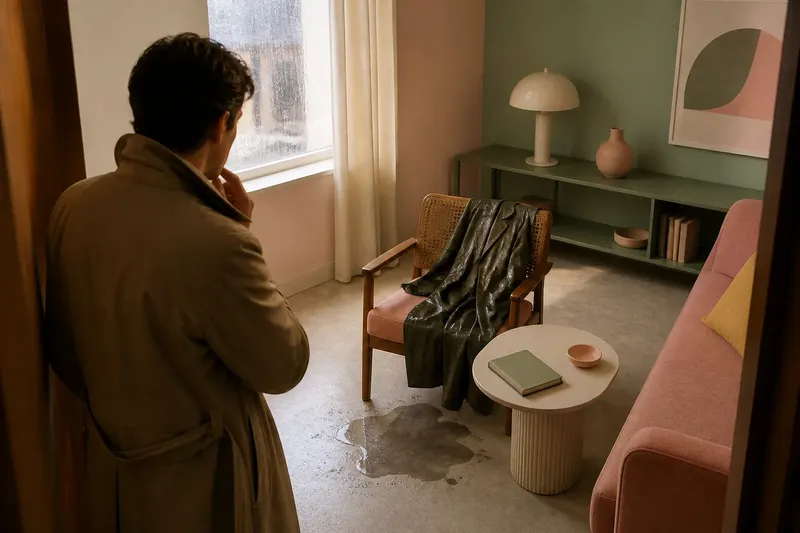
When a detail feels like a clue, write two short notes. In the first, record only what can be seen: “A red envelope lies under the chair.” In the second, record the inference: “Someone may have hidden it.” The first statement is observable; the second is a possibility that later images might support, revise or dismiss.
This distinction is especially useful when a shot gives one detail unusual prominence. A character glances towards a locked cabinet, but the image does not tell you whether the glance signals fear, recognition or simple attention. The actor’s expression, the surrounding action and later information may narrow the possibilities. Until then, keep more than one reading open.
Sound and editing can add context, but they do not turn an inference into a fact by themselves. A sharp sound beside an object can make it seem connected to the action; the next shot may confirm that link or reveal another source. For this exercise, note what is visible first, then add other cues in a separate line.
Use one scene across a week of viewing
A short routine can make close reading manageable without turning every viewing into a pause-filled analysis. Choose a scene you can replay easily, perhaps a brief exchange in a streaming programme or an online short. Use a notebook or a notes app, and return to the same passage on different days.
- On the first day, watch without pausing. Write down the moment that felt most significant and the reason you noticed it. Do not try to prove your reaction.
- On the second day, watch with attention to the whole composition. Note camera distance, angle, foreground objects, background activity and the position of each person.
- On the third day, inspect the edges. Record what is cropped, obscured or outside the shot. Ask what information the image does not provide.
- On the fourth day, list visible evidence. Describe gestures, objects, changes in position and where characters look, using plain language rather than motive words.
- On the fifth day, write possible meanings. Set each inference beside the detail that prompted it, and include another plausible reading if the evidence allows one.
- On the sixth day, replay the surrounding action. Notice whether what comes before or after supports, complicates or weakens your first interpretation.
- On the seventh day, revise your notes. Keep the observations that remain visible on screen and mark interpretations as stronger, weaker or unresolved.
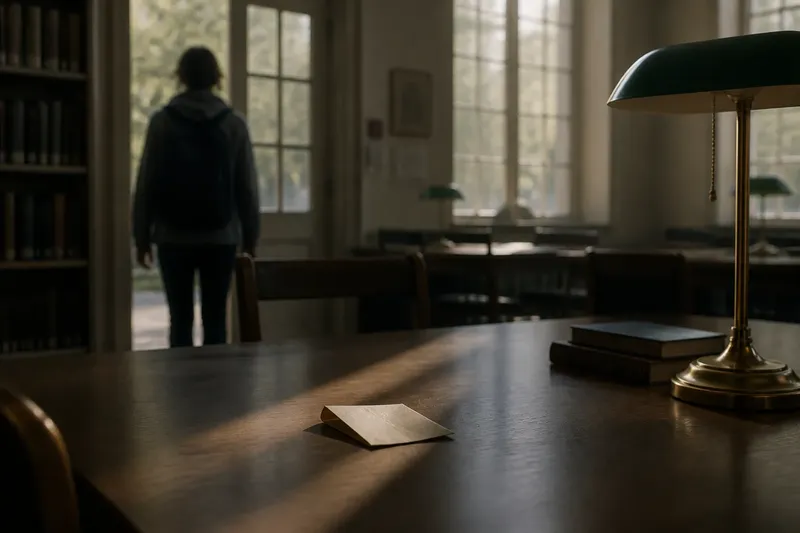
Say you choose an invented scene in which a student leaves a library while a folded note remains on a table. On the first day, you suspect the note was deliberately abandoned. On the fourth, you record only that it is folded, unattended and visible in the final shot; on the sixth, a wider view shows several people using the table, making accidental loss plausible too. The observable result of the routine is not a solved mystery, but a clearer account of what the scene does and does not establish.
Framing questions worth asking?
Does a centred object count as evidence?
It counts as evidence that the object has been placed prominently within the image. Its importance to the plot remains an interpretation until the scene gives supporting information.
What can an off-screen space tell me?
It tells you that the image withholds that part of the setting. A character’s look or reaction may suggest something beyond the edge, but the unseen source remains uncertain until it is shown or otherwise established.
How do I avoid reading too much into a close-up?
Describe the detail literally before assigning it a motive or symbolic meaning. Then check whether another shot, gesture or line of dialogue supports that reading, while keeping the description distinct from the interpretation.
Can animation use framing as a clue?
Yes: placement, scale, cropping and movement can direct attention in drawn, stop-motion or computer-generated images just as they can in live action. The visual evidence still needs to be separated from what you infer it means.
Let uncertainty remain useful
Some scenes deliberately leave a detail ambiguous, while others provide its explanation later. A careful viewer does not need to settle every question immediately. Keeping a note such as “the key is visible, but its owner is unknown” preserves the distinction between the image and a guess without closing off later discovery.
That habit also makes discussion more precise. Instead of saying “the frame proves she knows”, point to the glance, the object’s placement and the information still missing. Why the frame decides what counts as a clue is ultimately a question of attention: it selects the evidence you can inspect, while your interpretation remains yours to test against what the screen actually shows.